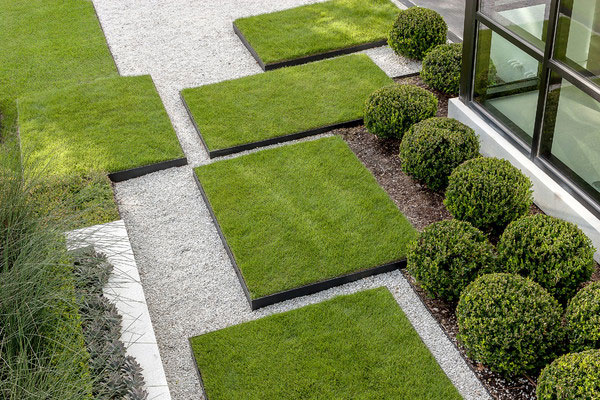
The key in designing a modern landscape plan actually has as much or more to do with the materials than they do with the plants. However often, modern landscaping provide scenic features of concrete paths, patios, steps and even stunning planters – all that have been combined with wood or metal accents. Pale colors such as pastel and pale yellow and plants with a distinct form would work the best in this sort of situation.
Modern landscaping design provides a new edgy look to your yard and garden and it would not look too bushy or in other word, messy. Among the visible features and characteristics of a modern landscaping design are these:
1) Structures imposed by hardscape
Most of the spaces are shaped and defined by paths and patios and the portion of landscape that human will use. The design is practical and well-organized.
2) Water features are smart
A carefully designed and organized water features will use less water than an area lawn of the same size. Modern water features would not leak and still can look attractive when not running.
3) Wood is important
It would act as a contrasting element that will mix with concrete or stone. In contemporary garden with Japanese or oriental influence might make good use of the wood feature.
4) Maintenance requirements are low to moderate
Many modern outdoor landscape has an abundance of hardscapes while lower amount of plants. So the amount of time you need to take care of the softscape can be reduced as a result.
5) The outside is connected to inside
Outdoor living spaces should flow easily from the inside space. Walking in an out should be as smooth and easy as possible.
However for those who happen to live in the big city, then you need to understand the challenges of creating an urban landscape design. Normally an area with high population density doesn’t mean that you can’t grow and maintain lush plant life in your personal space. Even at the most basic level, plants need sunshine and water. Your landscape design for the urban space should be based around the availability of these elements.
For urban landscapes they often feature spaces that primarily focus on preserving natural resources while creating unique environments that are inviting to human and wildlife populations. This is especially important in the facing of global change. Urban landscapes must be designed to meet the current needs and the growth of tomorrow.
Therefore remember to always engage with the professionals in order for us to help you in designing your landscaping, and to advise how you can get a unique and beautiful modern landscaping design that is not only pleasing to the eyes but also practical and low maintenance requirement .